Shop Suncare
4 HSA Eligible Sunscreens With Skincare Benefits

Key takeaways:
- Sunscreen is HSA eligible if it has an SPF of at least 15 and offers broad spectrum (UVA and UVB ray) protection.
- Besides sun protection, HSA eligible sunscreens can blend in with facial makeup, defend against acne, give your lips some gloss, and take care of your scalp.
It's estimated that 1 in 5 Americans will develop skin cancer in their lifetime. Too much UV radiation from the sun is a big risk factor for the disease. But regular sunscreen use can reduce the risk of skin cancers such as melanoma.
Many sunscreens are HSA eligible and can fit right in with your regular skincare routine. You can get the protection you need without applying a laundry list of products before you hit the beach.
Below, we’ll go over 4 HSA eligible sunscreens that do more than just keep away damaging rays.
1. Face Protection
Your face absorbs a lot of UV rays. So it’s a priority area for sun protection. Not to mention that a sunburn on your forehead or nose is likely to stick out.
The face is also a priority area for skincare. But there are HSA eligible sunscreens that can do double duty as skincare products.
HSA Store® Pick
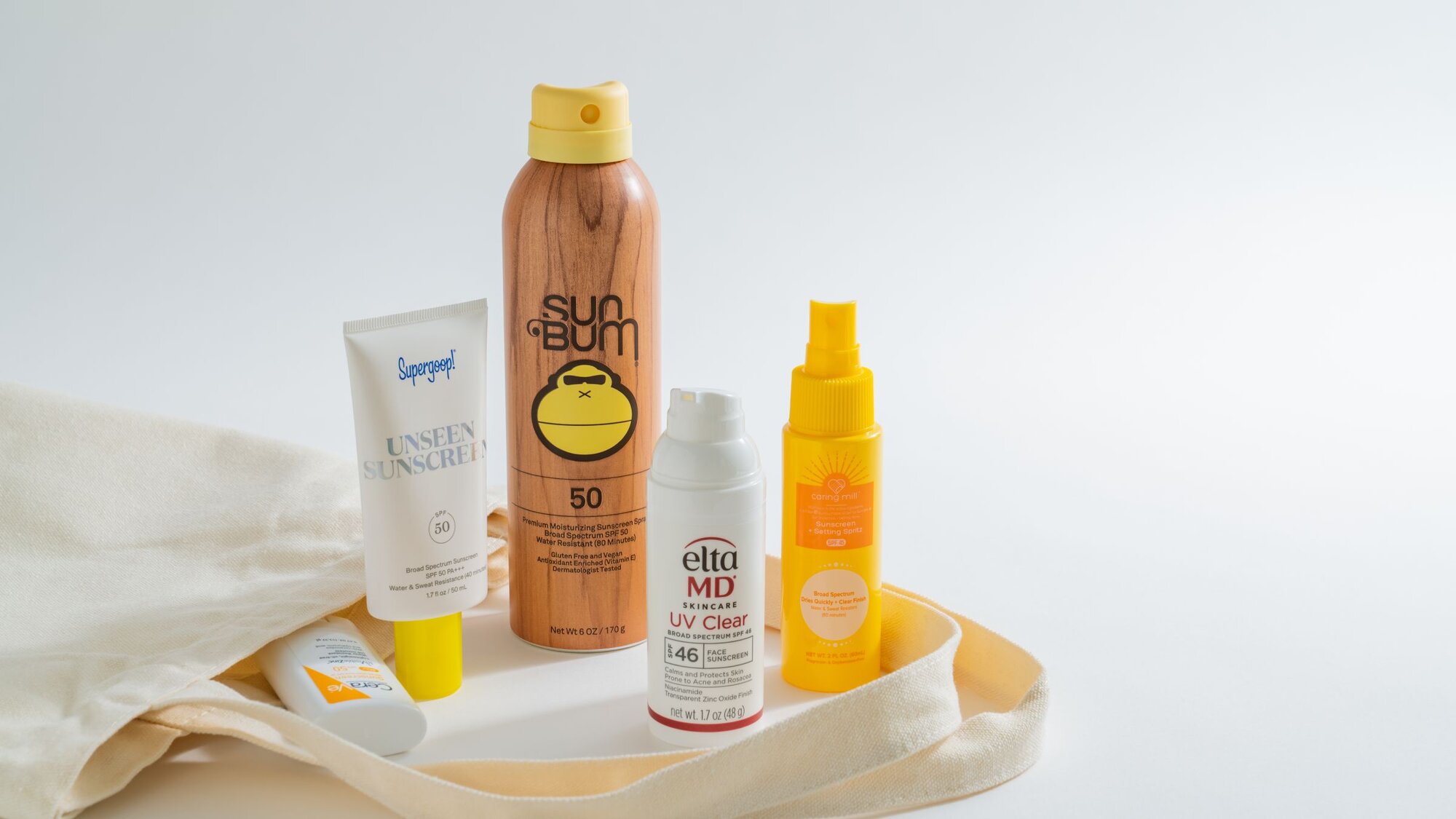
Supergoop! Unseen Sunscreen, SPF 50 offers broad spectrum SPF and stays invisible on all skin types. It improves skin clarity for smoother-looking skin.
The sunscreen is also non-greasy and non-irritating, which can benefit those with acne-prone or sensitive skin.
2. Acne-Prone Skin Protection
Sunscreen can keep the sun off your skin. However, certain types of sunscreens can also keep dirt and oils trapped in pores, leading to acne.
To avoid breakouts, search out sunscreens that are oil-free and non-comedogenic (designed not to block pores). Products that contain niacinamide can help fight acne and the marks it can leave behind.
HSA Store® Pick
EltaMD UV Clear Broad-Spectrum Face Sunscreen works well for skin types prone to acne or rosacea. It’s oil-free, non-comedogenic, and contains niacinamide. It can even be layered under your regular makeup.
3. Lip Protection
Your lips might not get as much UV exposure as your face, neck, or arms.
But they’re particularly susceptible to sun damage because the skin there is thinner and contains less melanin (a pigment that defends skin cells from UV radiation).
A sunburn on your lips can be painful and cause your lips to dry, crack, and peel.
HSA Store® Pick
COOLA Classic Liplux Organic Hydrating Lip Oil Sunscreen provides broad spectrum UVA and UVB sunscreen while also functioning as a lip gloss. Plus, it features ingredients such as vitamin E to keep lips hydrated.
4. Hair and Scalp Protection
Your hair can give your scalp some safety from the sun. But it may not provide enough protection, especially if you have thinning hair or are bald. Skin cancer can develop on the scalp and may not be as noticeable there as on other parts of the body.
Oil-free, water-resistant sunscreens are less likely to drip down into your face or weigh down your hair. Make sure to cover your hairline, areas where you part your hair or where it's thinning, and to any bald spots.
HSA Store® Pick
Sun Bum Scalp & Hair Mist is water-resistant, oil-free, and keeps your scalp protected without leaving you with greasy hair. You can use it for any hair type as well as with color-treated hair.
In Summary
Regular sunscreen use is a long-term investment in your health. And with HSA eligible sunscreens, you don’t have to juggle skincare and sun care routines this summer.
Choosing the right SPF is also something to consider when sunscreen shopping. Here’s how to find a product that works for you.
FAQs
Are all sunscreens HSA eligible?
No. To qualify for HSA coverage, a sunscreen must have an SPF of at least 15 and offer broad spectrum (UVA and UVB) protection.
Is tinted sunscreen HSA eligible?
Yes, tinted sunscreen is HSA eligible if it has an SPF of at least 15 and has broad spectrum UV protection.
References
American Academy of Dermatology Association. (2026). Skin Cancer.
Centers for Disease Control and Prevention. (2024). Skin Cancer Basics.
Centers for Disease Control and Prevention. (2025). Ultraviolet Radiation.
Cleveland Clinic. (2025). Yes, Even Your Lips Can Get Sunburned.
Genesis Cancer and Blood Institute. (2024). Choosing the Right Sunscreen for You.
Schlessinger, D.I., et al. (2025). Biochemistry, Melanin. StatPearls.
Skin Cancer Foundation. (2020). Ask the Expert: How Can I Protect My Scalp Better?
University of Utah Health. (2022). Sunny Days Ahead When You Protect Your Face.
Venosa, A. (2023). How to Choose the Best Sunscreen for Your Skin. Skin Cancer Foundation.